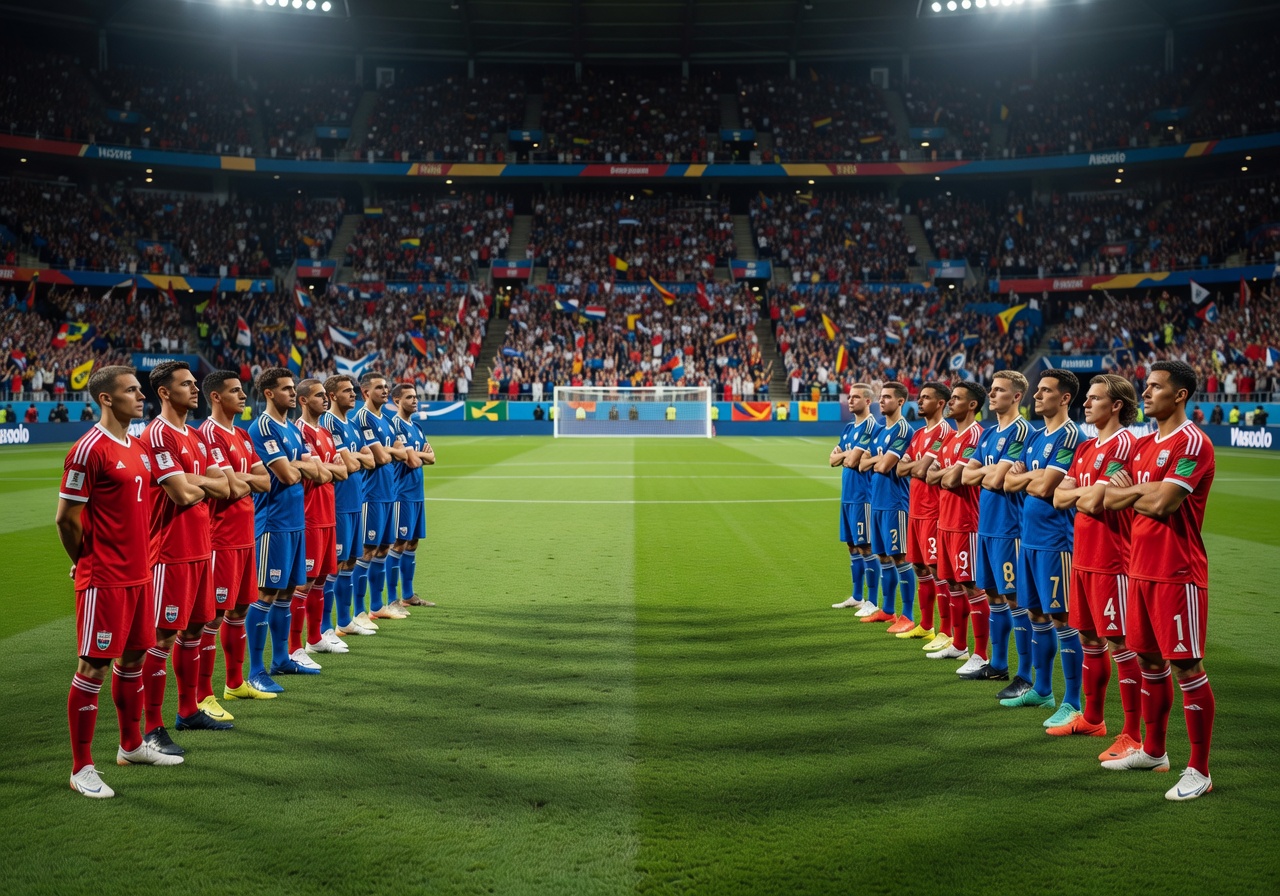
National football teams lined up on the pitch before a crucial group stage match at a major tournament

Group Stage Analysis: Who Will Advance?

The group stage is where World Cup dreams are made and broken. With 48 teams competing in 12 groups, the 2026 tournament offers more complexity and intrigue than any previous edition. In this analysis, we break down the key groups and identify the teams most likely to advance to the knockout rounds.

Group A: Home Advantage for the USA

The United States will benefit enormously from playing in front of passionate home crowds. With a talented squad featuring players from Europe's top leagues, they should be confident of topping this group. The Netherlands, always a force in major tournaments, are expected to join them in the knockout round.

Senegal will be a dangerous opponent for both teams, with their pace and physicality causing problems for any defense. Jamaica, while potentially the weakest team on paper, will be motivated by the occasion and could spring a surprise in at least one match.

Group B: Argentina's Path

As defending champions, Argentina carry a target on their backs, but their quality should see them through comfortably. Denmark's organized and disciplined approach makes them the likely second qualifier, though Nigeria's athleticism and Ecuador's altitude-trained resilience could make this group more competitive than it appears.

Group C: The Group of Quality

This is arguably the most competitive group in the tournament. France are the standout favorites, but Mexico playing at home in certain matches gives them a huge advantage. Japan's rapid improvement in recent years makes them genuine contenders to qualify, while Morocco's 2022 semi-final run proves they belong among the elite.

We predict France and Japan will advance, but any combination of three teams qualifying from this group would not be surprising. This is the group where upsets are most likely.

Group D: Brazil's Redemption

Brazil are desperate to make amends for their disappointing exits in recent tournaments. Their attacking talent is unmatched, and they should cruise through the group stage. Croatia, perennial overachievers despite their small population, are the likely second qualifiers with their midfield quality and tournament experience.

Key Takeaways

The expanded format means more teams will advance, reducing the chances of a major team being eliminated early. However, the quality gap between the established powers and the newcomers should still be evident. The most interesting battles will be for the second and third qualifying spots in the tougher groups.

The group stage sets the tone for the entire tournament. Teams that start well build momentum and confidence that carries them through the knockout rounds.

Groups to Watch Closely

  • Group C – France, Mexico, Japan, and Morocco create the "group of death"
  • Group G – Germany vs Portugal is a blockbuster opener
  • Group H – Italy and Belgium could produce a classic encounter
  • Group E – England vs Uruguay promises tactical intrigue

The beauty of the World Cup group stage is its unpredictability. While we can analyze form, rankings, and historical performance, the magic of the tournament lies in its ability to produce moments nobody saw coming. That is what makes the World Cup the greatest sporting event on earth.